Witt’s End

It's Not About Stories People Tell, It's About …

Well, before the heat wave is able to melt my camera gear, I thought I’d better take advantage of a relatively clear sky last night. I’m currently training myself with the gear I plan to use for upcoming road trips where weight restrictions (the gear, not me) will limit what goes. So last night I worked on aligning my new Star Adventure tracker and mounted the Nikkor 28-300 mm lens. This moon shot is a stack of what started to be nearly 1000 images. I removed the photobombing by planes and satellites and whittled it down to about 750. My stacking program whittled it even more to 647 in selecting the best images. I’m pleased with the results even if it was a bit of overkill. The tracker holds the camera steady as a rock over long periods of time. 300mm, f5.6, 1/250 X647.

And this shot, over the roof of the Big Dipper, is a composite of 35 images. It started out with 150 images but was cut way down to improve the quality. Stacking improved the vast number of stars that are out there, to the point where the dipper is tough to find. I love it! (You might have to double click on the image to see all the stars. 28mm, f5.6, 5 seconds X 35.

Back from another 5 days at the Cherry Springs Star Party, Cherry Springs, Pennsylvania. I think the threatening weather forecasts kept the crowd down a bit, however, those among the 500 or so in attendance made the best of holes in the clouds. Seeing conditions were marginal since there was so much water vapor in the air. But hey, you do the best you can with the tunes ya got. My current obsession is to get a great panorama image of the Milky Way. I’m still a ways off, however, I’m pleased with what I was able to manage. When you’re standing next to the camera with the instruction book in hand, you can’t always expect the best results. Enjoy these images. A note about the sky: The sky is not always blue or black. In fact, most of the time (in our part of the world) the sky has a green/yellow cast because of a condition called air glow–essentially moisture in the air. We think it’s blue ’cause that’s what we’ve been taught. Go out to a truly dark sky area, let your eyes adjust for 30 minutes and you’ll see what I mean.

This was looking into the galactic center of the Milky Way. Panorama made with Rokinon 14mm lens on Nikon D850. 8 images stitched together in LightRoom Classic.

Milky Way rising. Astronomers use red light to preserve night vision. Single image made with Rokinon 14mm lens on Nikon D850

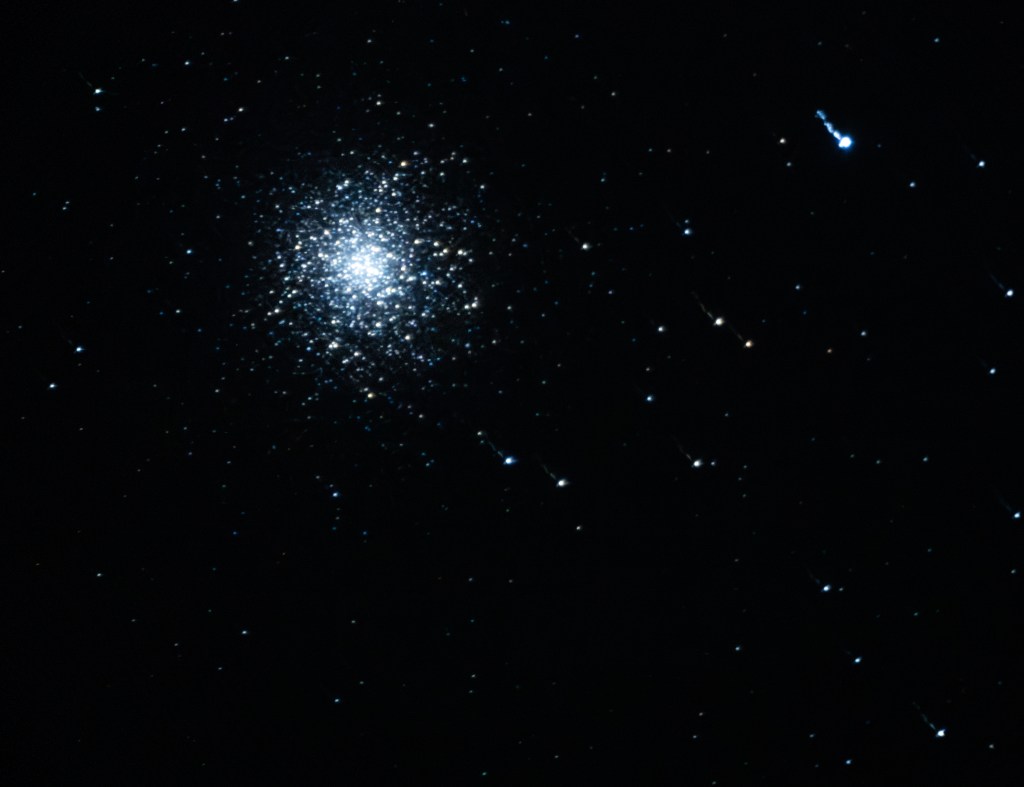
And a favorite star cluster known as M13, imaged through Celestron Evo 8 telescope, captured by Nikon D850.

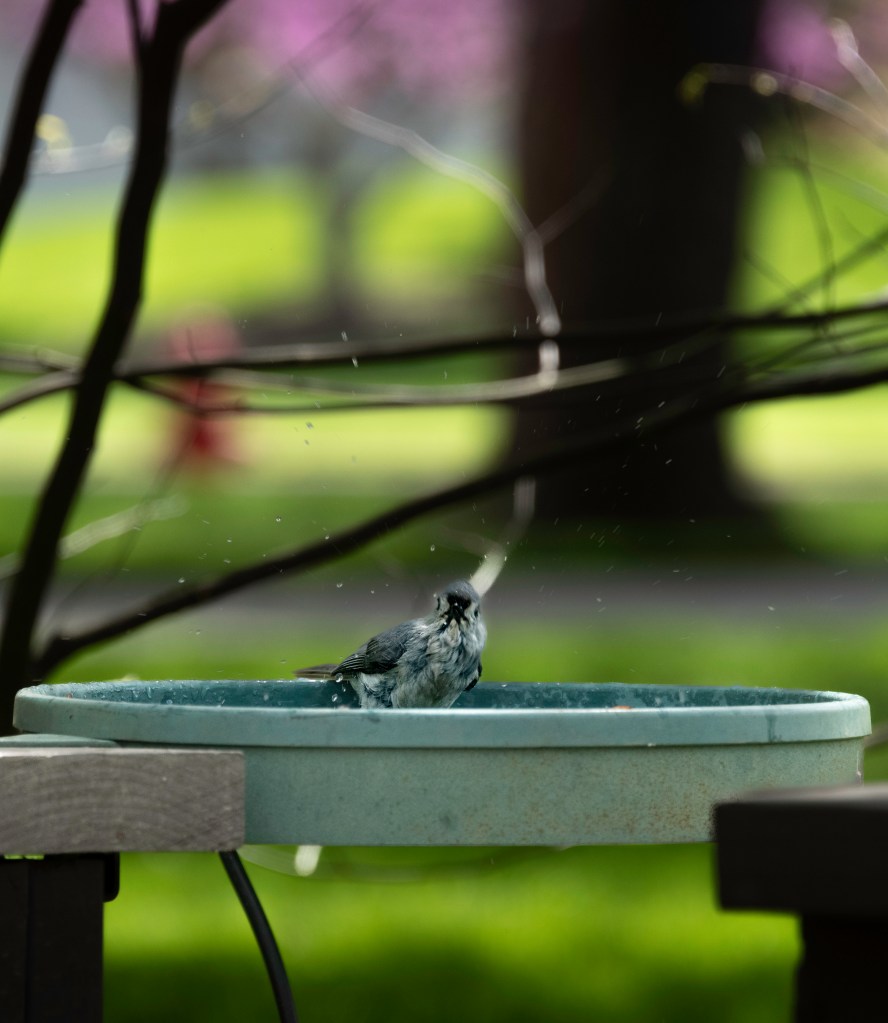
Actually, I was sitting on our deck, eating lunch. I’d just returned from a walk on the wild side in the Cuyahoga Valley National Park, hoping to add to my portfolio of the dangerous wild animals of Summit County, and enhance my chances of getting a job at National Geographic. Well, there were no wild critters to be seen, except for a Turkey Vulture. I played it safe and waved to him to let him know I was still alive, not his lunch. So, sitting on the deck, turkey (not vulture) sandwich in hand, the birds started showing up. Fortunately, I had the camera at hand … I’ll clean the mayo off later.

Water temp is just fine. Where’s the soap?

Hey! We could use a little privacy here.

Chipping Sparrow

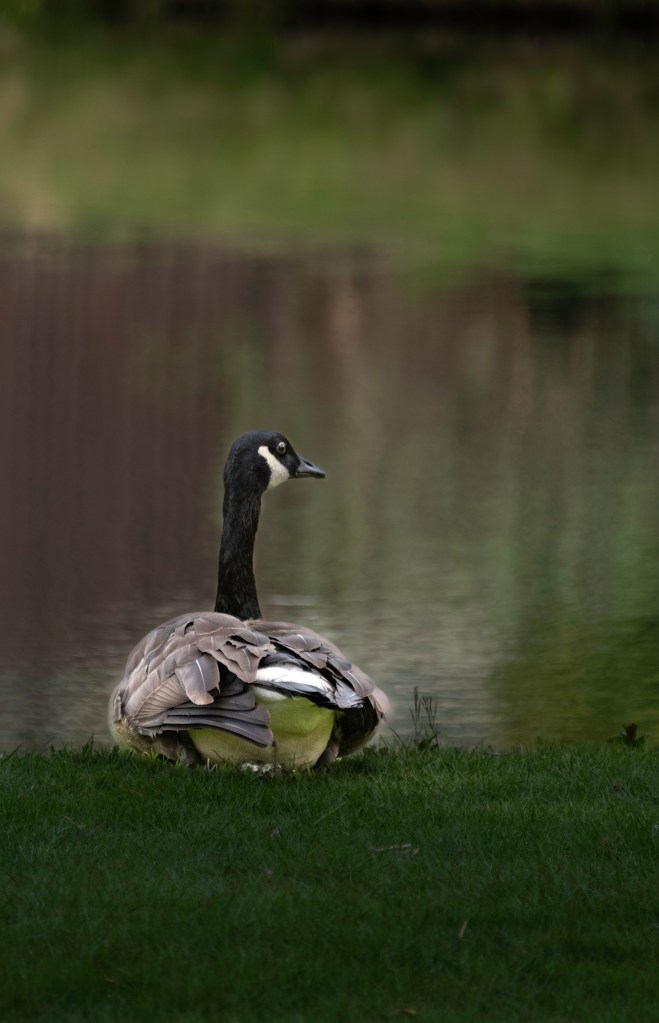
Or, as the one wild creature I did find said, “Good day to just sit and contemplate the vagaries of life, ya know.”

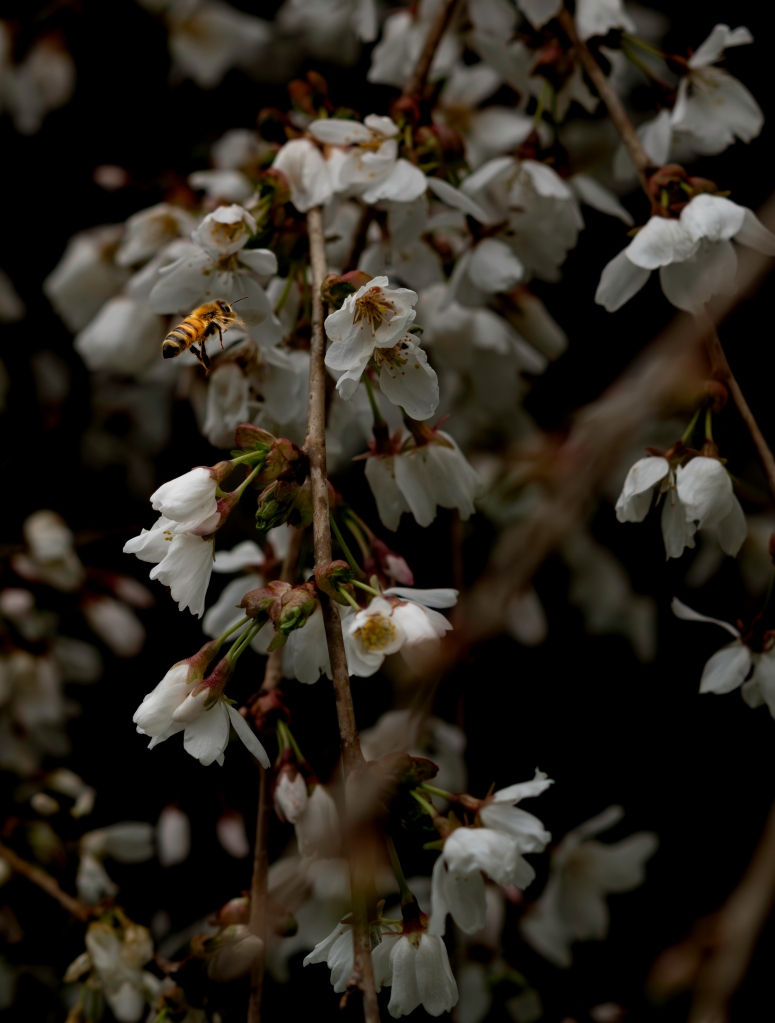
For an uncountable number of weeks and days we (meaning me, mostly) have focused our eyes on the cosmos. The big show, the Total Eclipse, has come and gone. We have plenty of pictures to show and, unless you an astrophysicist, not much to think about. What, in the end did we get out of the eclipse other than some great memories–and you can’t eat those? Just after the eclipse I took a walk in the neighborhood to decompress from the excitement. I found myself standing next to a blossoming tree that was humming with excitement. As I got closer I realized the tree was covered with honey bees, all working like crazy on something that will last long after the memories have faded.

The memories of the Great American Eclipse will be gone far too soon, adding another item to the list of things that once were. The efforts of the honey bees, however, will endure.

I’ll skip over all the stories of gnashing teeth, extra high blood-pressure medicine and frayed nerves and get right to the end of the story. Here, in Northeast Ohio, we had a damned good eclipse experience on April 8, 2024. I’ve only thought about this for the past seven years, since we saw the 2017 total eclipse in Casper, Wyoming. One of the early questions most eclipse watchers have when it’s over is, “When’s the next one?” And we knew it would be in Cleveland, in April, certainly our cruelest month. The first week in April, temperatures could be 81 degrees, or 18 degrees. We could have flowers blooming or eight inches of snow. That’s what makes living here so exciting and worthwhile.

This year was super. The rain in the morning caused a lot of angst, however, by noon things were looking good. Temps escalated to more than 70 degrees with high-level wispy clouds. Friends from New Mexico, with whom we had shared the Wyoming eclipse experience, had arrived a few days earlier. Neighbors started arriving about 1 p.m. ’cause they knew the old guy with all the telescopes would be locked and loaded for the 3 p.m. show.

Even though those high clouds stuck around, we got the whole show from first bite to last. Baily’s Beads, when the sun peeks through the irregular surface of the moon, were spectacular.

The Diamond Ring, when the sun gets serious about moving out of the moon’s shadow, could not have been better.

And, of course totality was a totally awesome experience.

Can’t wait for the next one coming to North America in 2045.

Spent some time in the dark in the Cuyahoga Valley National Park last night. Must be getting warmer ‘cause I saw more teenagers in cars at the Station Road parking lot. For me (too) it was all about experimentation. And, at least in my case, I’ll be going back for more, next opportunity. Working with a new lens and new post processing software so I (too) have a lot to learn. 

Enjoy the dark sky on your first night, Mr. Moon.