Witt’s End

It's Not About Stories People Tell, It's About …

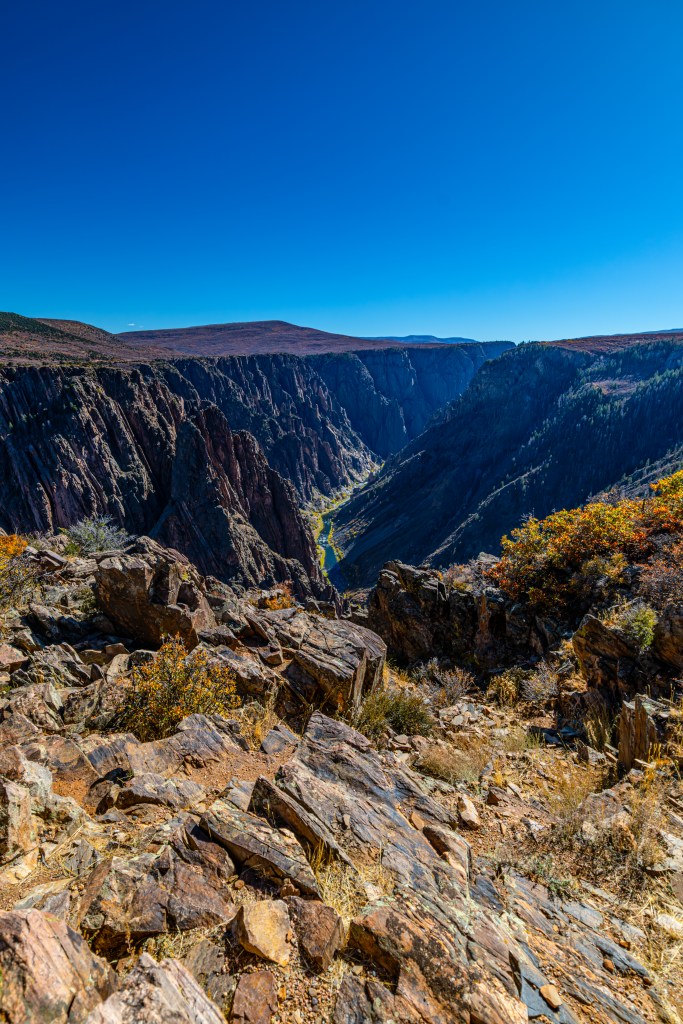
As luck will have it, I’ve been so busy of late I haven’t had time to do anything. (Thanks for the kind words, Yogi.) I finally got around to sorting through the last of the images from the recent western trip Susan and I completed in October. One of our planned stops was the Black Canyon of the Gunnison in western Colorado. This national park is not as well known, nor heavily visited, as others in the National Park System line up, however, it is not to be missed. We were there on a gorgeous fall day and spent our time exploring the entire length of this dynamic spot, watching the sun and shadows create pictures with every turn.

About half the area (16,000 acres) are designated as wilderness, and virtually in accessible. The canyon gets its name from the fact that parts of the river receive only (on average) 33 minutes of sunlight per day. Talk about a short growing season. At its steepest point, the canyon is only about 40 feet wide at the river.

I tend not to choose a favorite spot when surround by places like the Black Canyon, so I’ll show a couple images from a spot that was as close to breathtaking as these things can get. It’s called the Painted Wall, considered the tallest wall in the canyon at 2,250 feet (yeah, about a half mile). The rocks here are about 500 million years old (give or take), mostly metamorphic and igneous. The Painted Wall has intrusions of pegmatite that look as if a giant splashed paint on a black canvas.

Not to be missed.

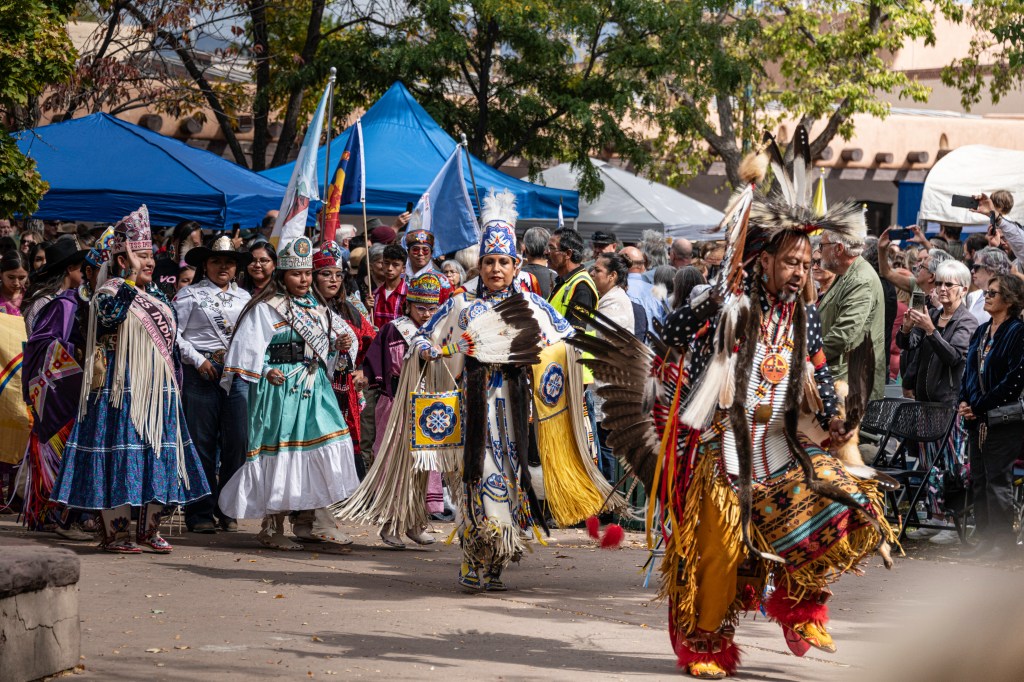
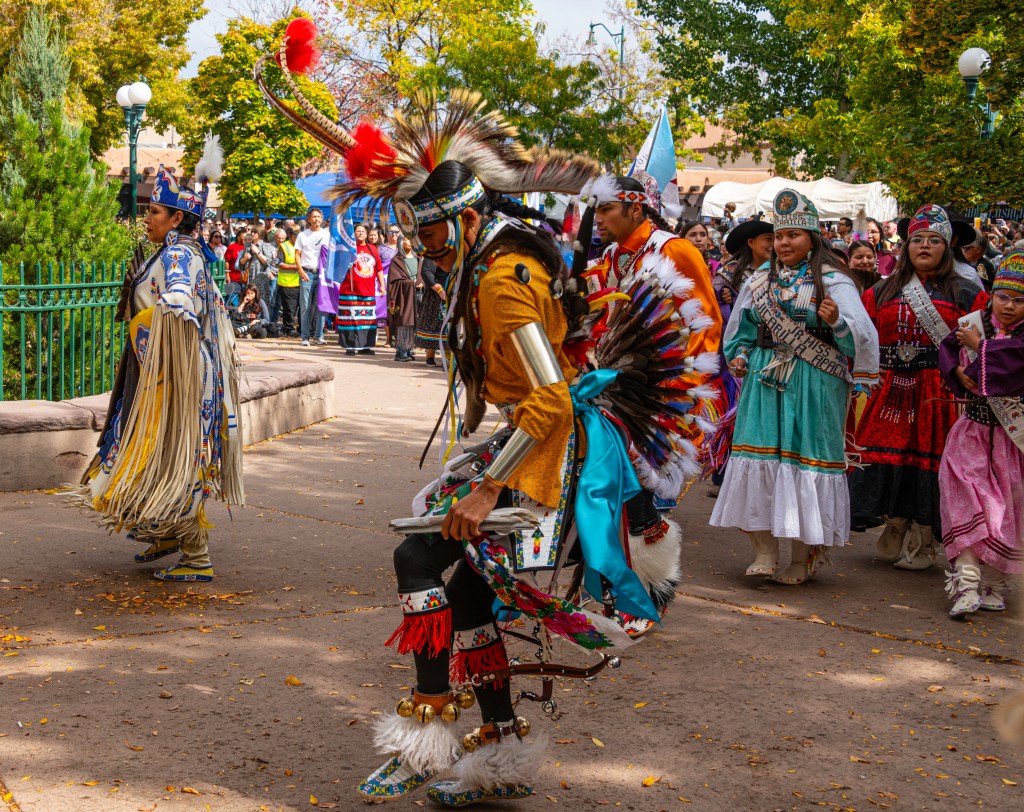
One of the joys of travel is that sometimes you’re in the right spot at the right time. Too often you’re not—as in, “ya shoulda been here yesterday.” Well, for Susan and I, along with our friends Bobb and Kathy Barnes, on Indigenous People’s Day this past October, we were spot on. Santa Fe, New Mexico, hosted its second annual tribal nations Powwow. Twenty-three tribes, Nations and Pueblos in New Mexico were present. The Plaza area was filled with music, dancing and native crafts. The sights and sounds were overwhelming as dancers and drummers entertained for hours. Surrounding the Plaza area, tables of native crafts and foods were displayed. The costumes of the dancers, some ranging in cost of more than three thousand dollars were the highlight for thousands of people gathered for the celebration. And while it might seem like this was a glimpse into the past, it’s real every day life for Indigenous People in this country.

If you haven’t visited Echo Bluff State Park in Shannon County, Missouri, in the Ozarks, I suggest you add it to your travel itinerary. Sure, it’s out of the way, located on Highway 19 with enough twists and turns to make you seasick, however, it’s worth the effort.

It’s very much a modern-day resort, 476 acres with all the amenities. For Susan, however, it was a step back in time. This state park began its life as a summer camp for kids back in 1929. Right, almost 100 years ago. Back then it was known as Camp Zoe. She and her sisters attended the camp more than 70 years ago. I’ve listened to stories about the camp for nearly a quarter century and was excited to finally get a look.

Naturally, a lot has changed in the past 70-plus years so our days were spent hiking the grounds looking at old, some might call, derelict buildings and sites where now only ghosts and memories linger. Places where kids swam and rivers where they canoed have changed, somewhat. But the stream, Sinking Creek, and the bluff that protects it are still in place. A new lodge has replaced cabins and tents, cement has replaced gravel.

If you’re quiet, you can stand by the edge of the creek and hear conversations from far away echoing off the curved bluff. Maybe even conversations from 70 years ago.

Congress created Cuyahoga Valley National Park on December 27, 1974, by passing Public Law 93-555. That moment capped off decades of people treasuring the valley for outdoor recreation and working for its protection. By 1974, some parts had already become parkland. Other locations were in private ownership. Many places showed the scars of heavy land use. In the 50 years since park establishment, people have worked hard to renew our natural and cultural resources. The valley has been transformed into a vibrant, healthier landscape enjoyed by millions each year.

In honor of our 50th anniversary year in 2025, Cuyahoga Valley National Park is highlighting 50 key events that help define who and what we are. They showcase the many partners that have come together to preserve open space, create opportunities for recreation, clean up pollution, restore habitats, and save historic resources. These moments demonstrate the power that people have when we work together for the wellbeing of current and future generations.

Most of the events focus on the big things in the park; miles of trails, iconic bridges–old and new, and diversity of animals. I opted to take a closer look at some of the small things the park has to offer.

I once worked for a publisher who, too often, commented on a picture I made (with great risk to mind and body), “Well, I guess even a blind pig sometimes finds an acorn.”
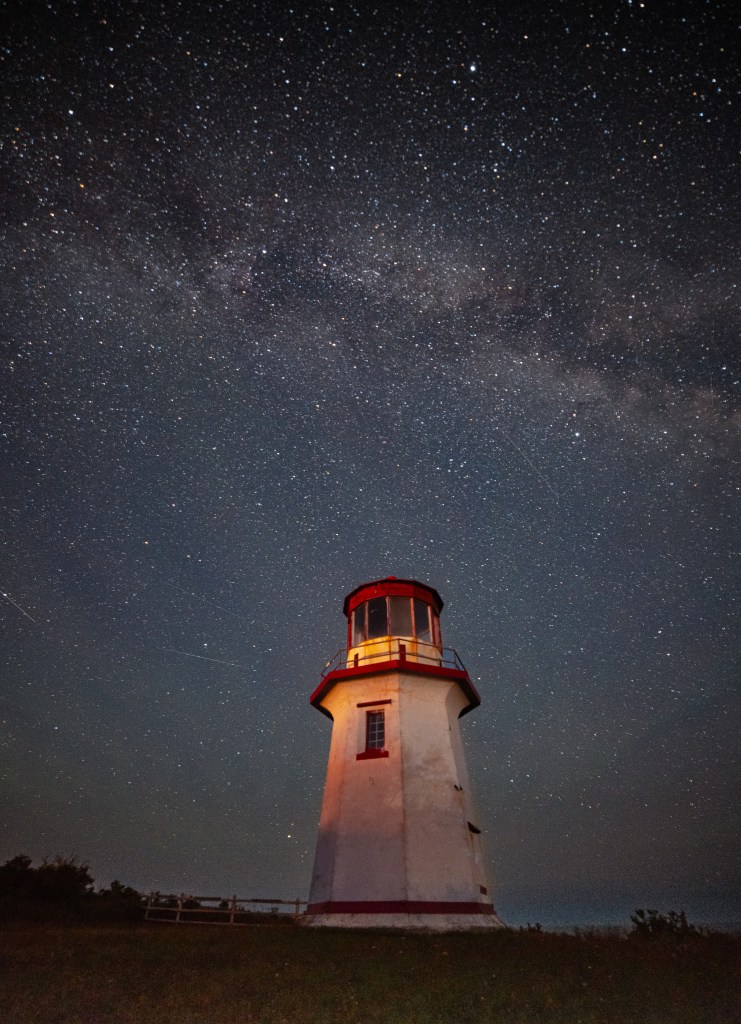
Last night I guess I was the pig. We’re camped on the outskirts of the Forillon NP on the tip of the Gaspe Peninsula. Several times we passed this incredible light house, the tallest light on the eastern shore of Canada. I knew it would be a great nightscape image. So, when the sky cleared (so I thought) last night, and after losing a round of Five Crowns, I headed to the light—alone since all of my compatriots thought going to sleep was a better option than standing around in the dark, on a path traveled by unknown creatures. Turns out, when I got to the spot I had scouted earlier in the day, the sea fog had moved in and things were less than gloomy. Any sensible photographer would have left the gear in the car and returned home. However, being the blind pig in search of eats, I persisted.

No stars, as I had hoped, way too contrasty light, and the occasional pickemup truck speeding by on the near highway, all sort of came together.

Last night was one of those times when an astro photographer with any sense would put his gear back in the car and go home. Well … I really wanted to get an image of the full moon because we only get a dozen a year—and you can’t count on that, given the weather and so much more. Plus, it’s the 55th year since Neil Armstrong walked on the moon’s surface. After that momentous night I recall asking my grandfather if he thought he’d ever live long enough to see men walk on the moon. He replied, “I never thought I’d live long enough to see men fly.” Oh, right.

While setting up the Sigma 150-600mm/Nikon D850 on the star tracker—not sure it would even work, not really focused, clouds all over the sky, I glanced up and saw an air liner headed right at the Tyco crater. Yikes! Just push the button! Okay, so it’s a bit out of focus. I’ll keep it.

I nearly nodded off while waiting for the clouds to move on to some place where people don’t care about clouds at night and thought, well, let’s see what happens. Hmmmm

Then it looked like the sky might clear, yay! No! Stay away from those trees! Oh, never mind. It’s all about composition. Ya seen one full moon ya seem ‘em all.