Witt’s End

It's Not About Stories People Tell, It's About …

Amazing what you come across when doing a bit of cleanup, the intention of which is to toss out things you haven’t needed, or thought of, for a long time. This is even more so when it comes to cleaning photo files. Below is just one example.

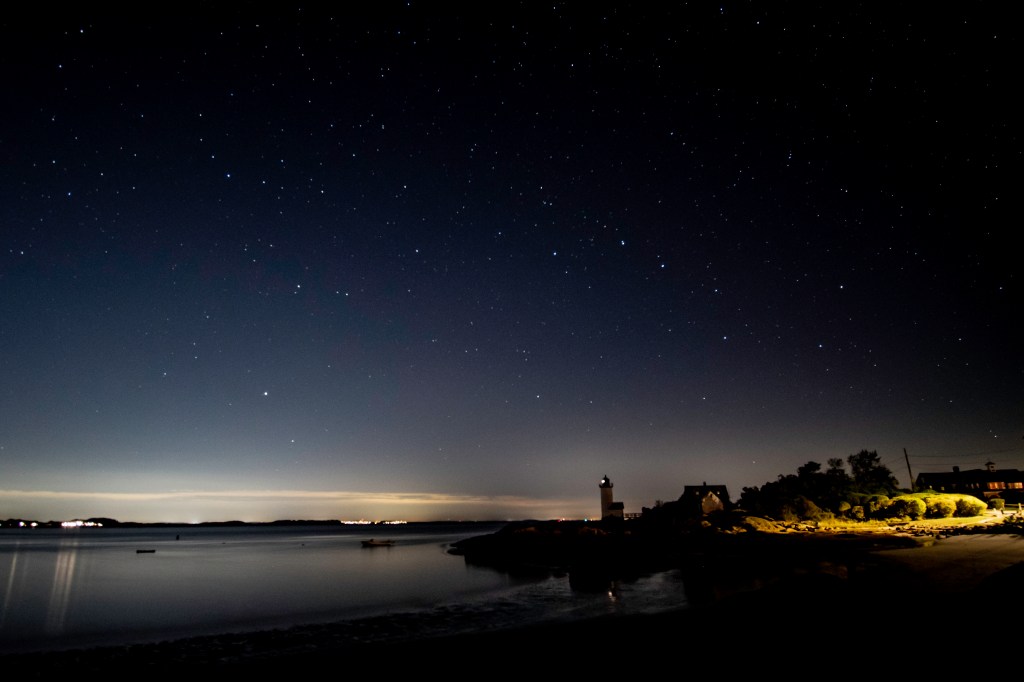
A couple years ago I wrote about the great photo opportunity presented by the lighthouse on the Annisquam River in Annisquam, Massachusetts. At that time, I noted that to get the best shot would require a combination of low tide, clear weather, and night sky. Odds of those three things happening at the same time were about the same as, well, I was going to make a reference to Cleveland sports teams, but I’ll resist the urge.

So whoda thunk it would actually happen last fall while we were visiting our favorite spot on the east coast of America—Annisquam on Cape Ann. I’ll spare you the drama of having to scramble over boulders the size of automobiles in the dark carrying my weight in photo gear, barking coyotes and a bit of trespassing, to say nothing of pilot error like realizing tripod legs sink in wet sand and forgetting that people run their dogs on the beach after dark, to show you the image. A star trail, with a few photo bombs by airplanes. I’ve got a few other ideas for that spot that, hopefully, I’ll remember to show the pictures of in the future. Stay tuned.
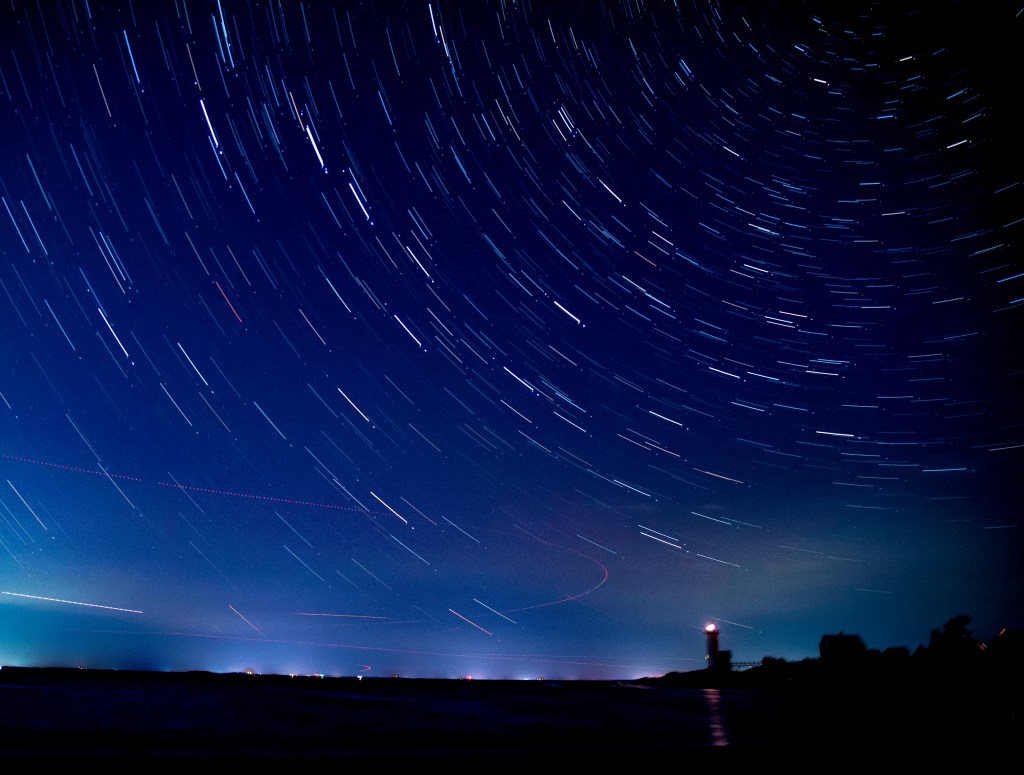
Lighthouse on Annisquam River, Cape Ann, Massachusetts
Winter along Lake Erie is always interesting and a fun time for birders. The hard-core types are out there in sub-zero temperatures trying to identify various species of gulls, or, earnestly searching for Snowy Owls. This winter, however, has been victim to climate change. It’s mid-February and we have less than four percent of the lake in ice. We should have about half the lake covered. Consequently, gulls which normally flock to the south coast of the lake are somewhere else.

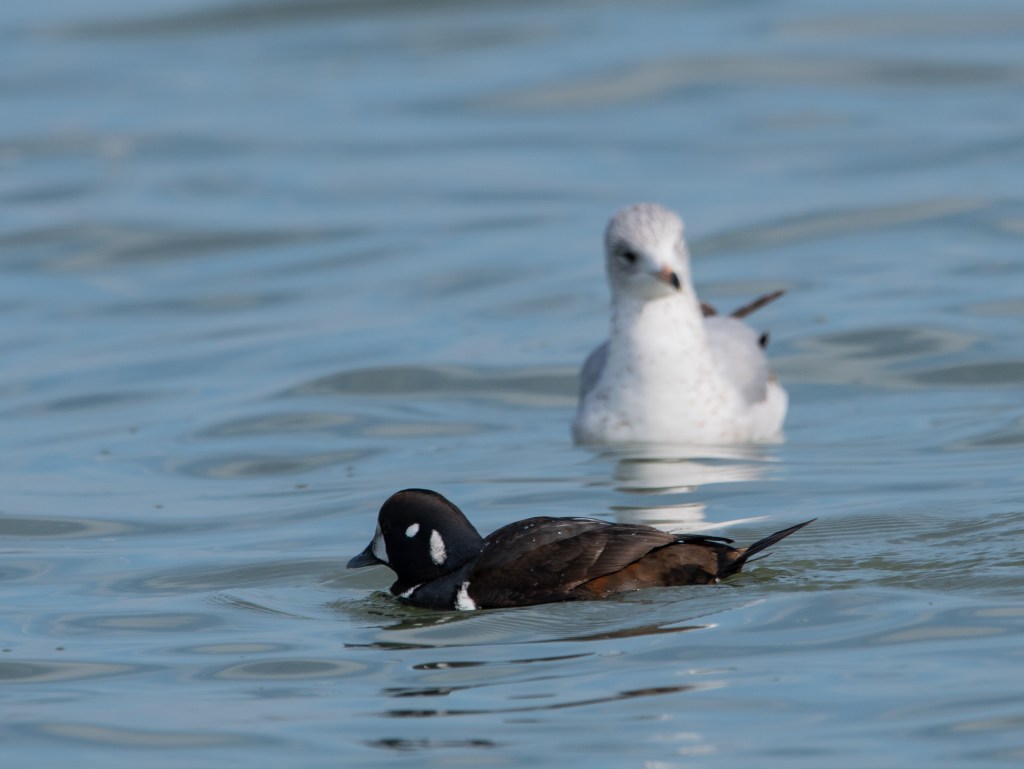
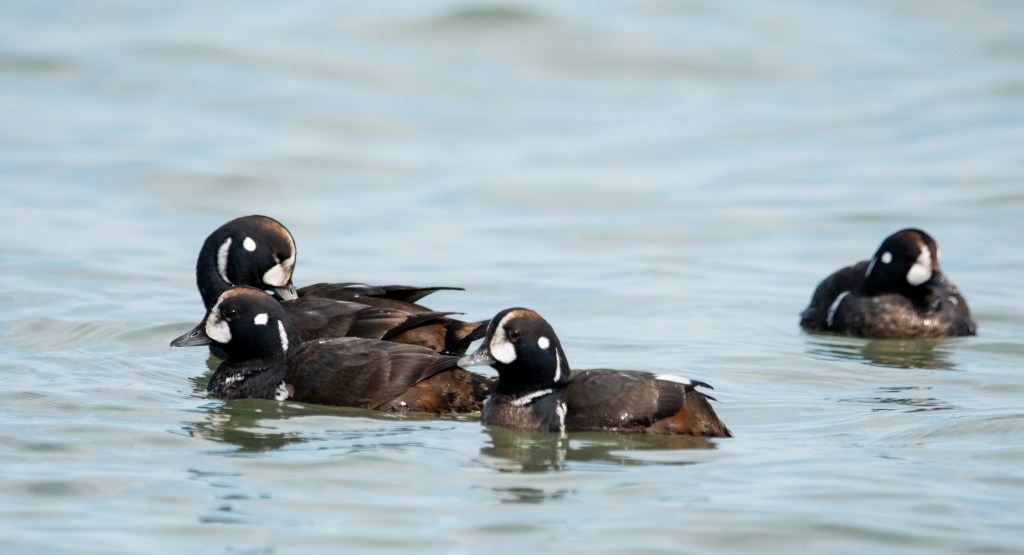
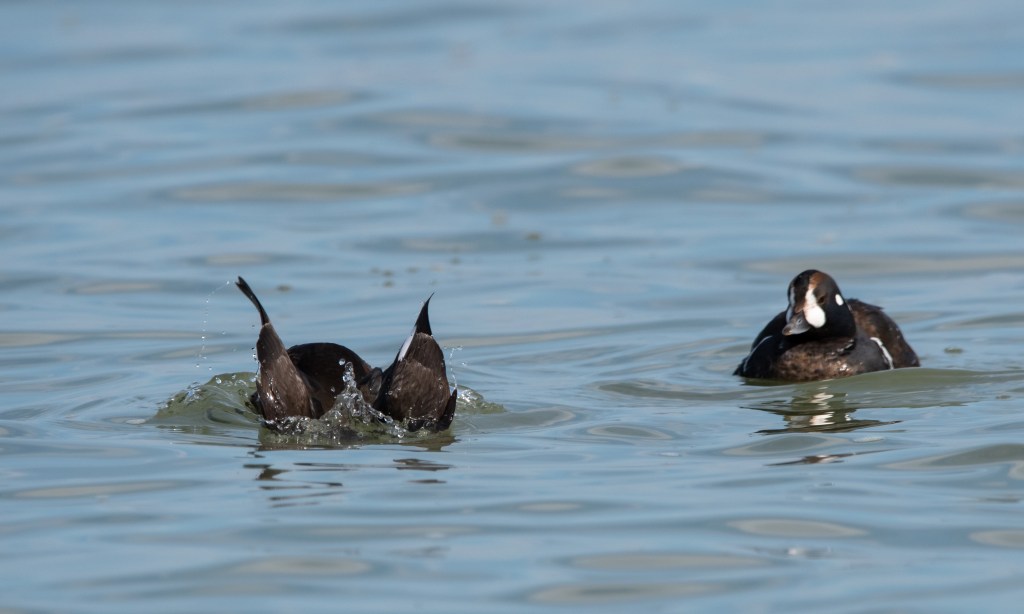
All is not lost, however. For the past couple months we’ve been able to enjoy the actions of four Harlequin Ducks. These birds come here, thinking it’s like the Florida Keys. Their presence borders on rare for this area, certainly, uncommon. This quartet has been near Rocky River Park where, apparently, the eats are good. While Susan and I watched, they seemed to be feeding on Zebra Muscles. Occasionally a duck would spit out a snail and the opportunistic gulls would be after it like a chicken on a June bug—so to speak. This group is in winter, or non-breading, plumage, a spectacular mix of white spots, along with shades of brown and black.

Harlequin Ducks on Lake Erie

Diving for Zebra Muscles

An opportunistic Ring-billed Gull, waits

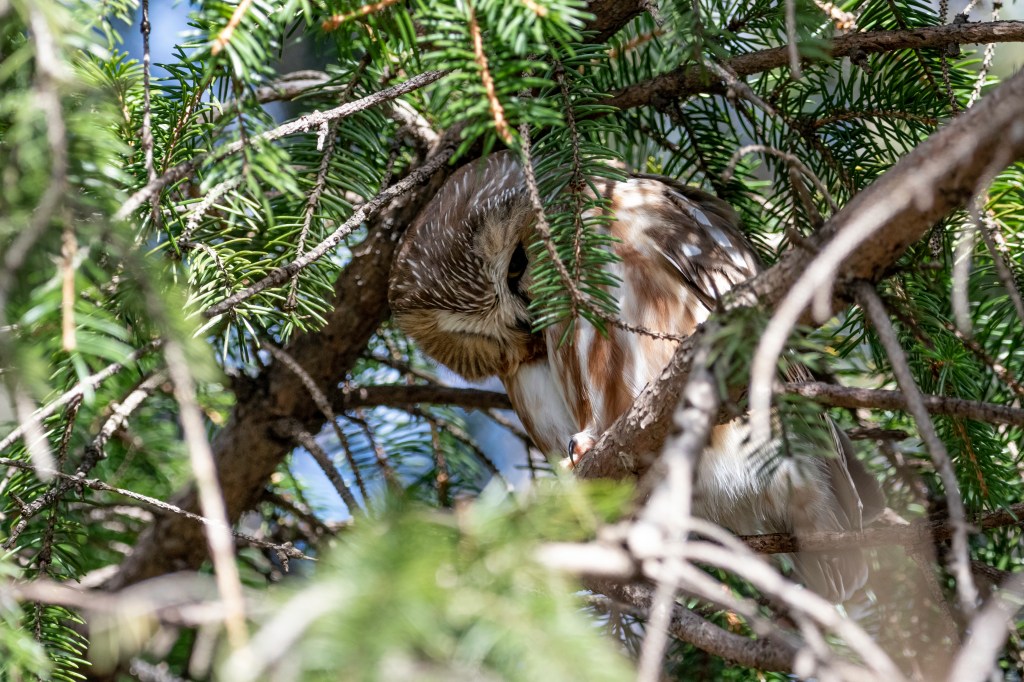
It’s most often the small things in life that get birders excited. A small increase in temperatures, say from 28 degrees in the morning to 50 degrees by noon. Or, the rare visit by one of the nation’s smaller owls, say, the Northern Saw-whet owl. Such was the serendipitous intersection of these two phenomena, recently, at the Cleveland Lakefront Nature Preserve.

The weather is—the weather. The owl, however, is something else, again. The owl is on the move between its breeding grounds on the other side of the pond we refer to as Lake Erie, and warmer winter habitat farther to our south; probably heading back north since climate change has all of us confused. It’s a small bird, average height is seven inches, give or take, and weighs only a few ounces. They prefer conifer trees and are often found at eye level.

Such was the case with the bird we encountered. Occasionally, he opened an eye to check the paparazzi, but mostly he wanted to sleep.

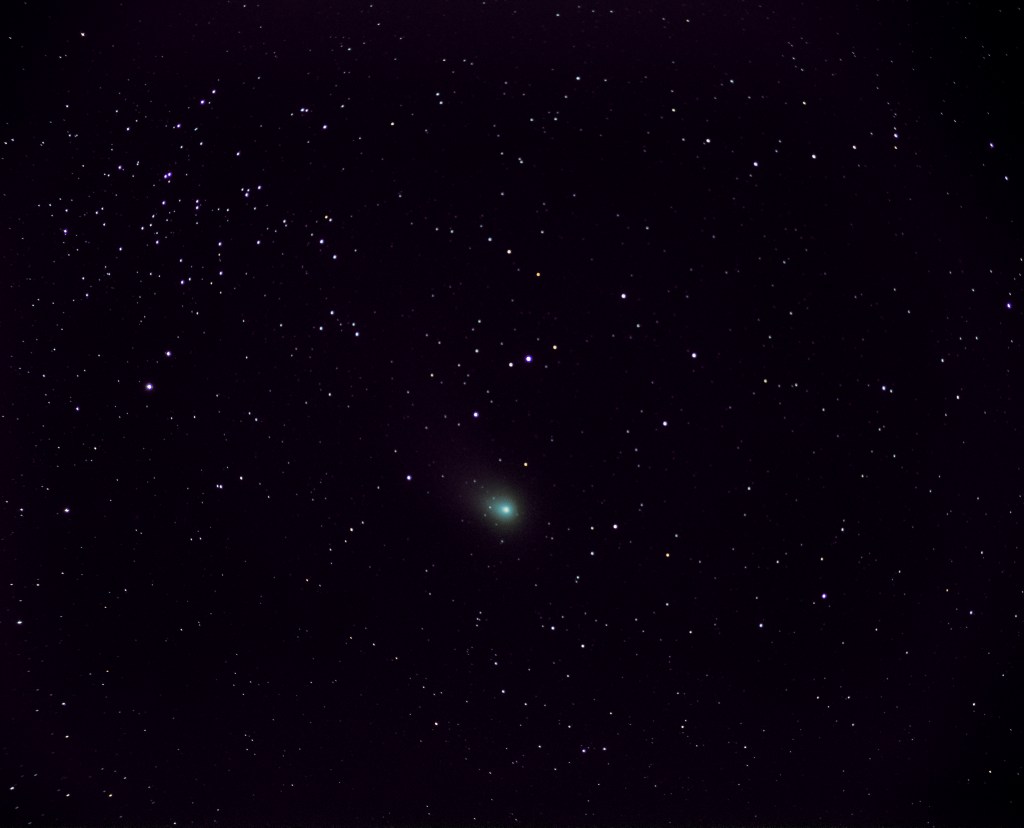
Our planet had a brief visitor the past couple months who promises to be back in about 50,000 years. if you missed this green guy, stay tuned. I figured I might not make it for another multi-thousand centuries so I better try for a selfie. Well, the selfie part didn’t work, however, in spite of the crappy weather here in northeast Ohio, I did manage a portrait of the comet more affectionally know as C/2022 E3 (ZTF). It zipped past the sun in January and started headed for really outer space when I caught up with it on February 14. It’s traveling at around 156,000 miles per hour so you have to look quick. It’s green because of sunlight interacting with carbon and cyanogen in the comet’s head.

C/2022 E3 (ZTF)

Picture saved with settings embedded.

For the past 20 years Susan and I have been visiting a friend in Annisquam, Massachusetts. There’s a well kept lighthouse there, guiding ships along the Annisquam River to the nearby fishing town of Gloucester. I’ve taken countless photos of the spot because it just begs, challenges, one to get the perfect photo. On our most recent visit it was as if the lightbulb over my head went off and I realized shooting the structure at night was what I needed, not another daytime picture. So, on a nice clear night, Susan and I worked our way around the rocky shoreline in the dark for me to get the proper angle. Of all the variables you have to consider in photography, working with the movement of tides is not one that usually comes to mind. I found the best possible spot where I could stay dry and fired away, vowing next time I’ll check the local tide charts to get the exact angle. Stay tuned.

The lighthouse at the Annisquam River, Massachusetts, built in 1801.

There are billions of stars out there, however, it’s the planets that often attract people to the hobby of astronomy. And there are as many reasons for enjoying the views of distant planets as there are people doing the viewing. Saturn with its mysterious rings is always a favorite when people ask to look through my telescope. Mars and its reddish dust storms, the hazy blue color of Neptune.

I enjoy Jupiter. It’s not only the largest planet in our solar system, one of its features is a storm, the Great Red Spot, that’s larger than our entire plant. And it has a host of moons, always changing position throughout the night. For amateurs with limited equipment and limited budgets, the planet’s details are tough to see, however, the position of its four primary moons is always visible, even with binoculars.

Currently, the end of December, Jupiter is low in the southwestern sky as is Saturn. In fact, because of their orbits, they’ll appear very close; a conjunction astronomers call it. On December 21 they will appear to be a single star even though they are millions of miles apart. If you have a chance, get out just after sunset and take a look at these two gas giants. They’ve not appeared this close in 800 years and won’t line up again like this until 2080.

Jupiter and four of her moons as seen December 10, 2020.